Young people ask me sometimes how I got into this line, and what they should study.
I usually hesitate before replying, because my path isn't going to be anyone else's, and the honest answer is that most of it came from being wrong for a while. So rather than advice, here's a reflection: where I started, what I misunderstood, and what the years have changed in how I think about this work.
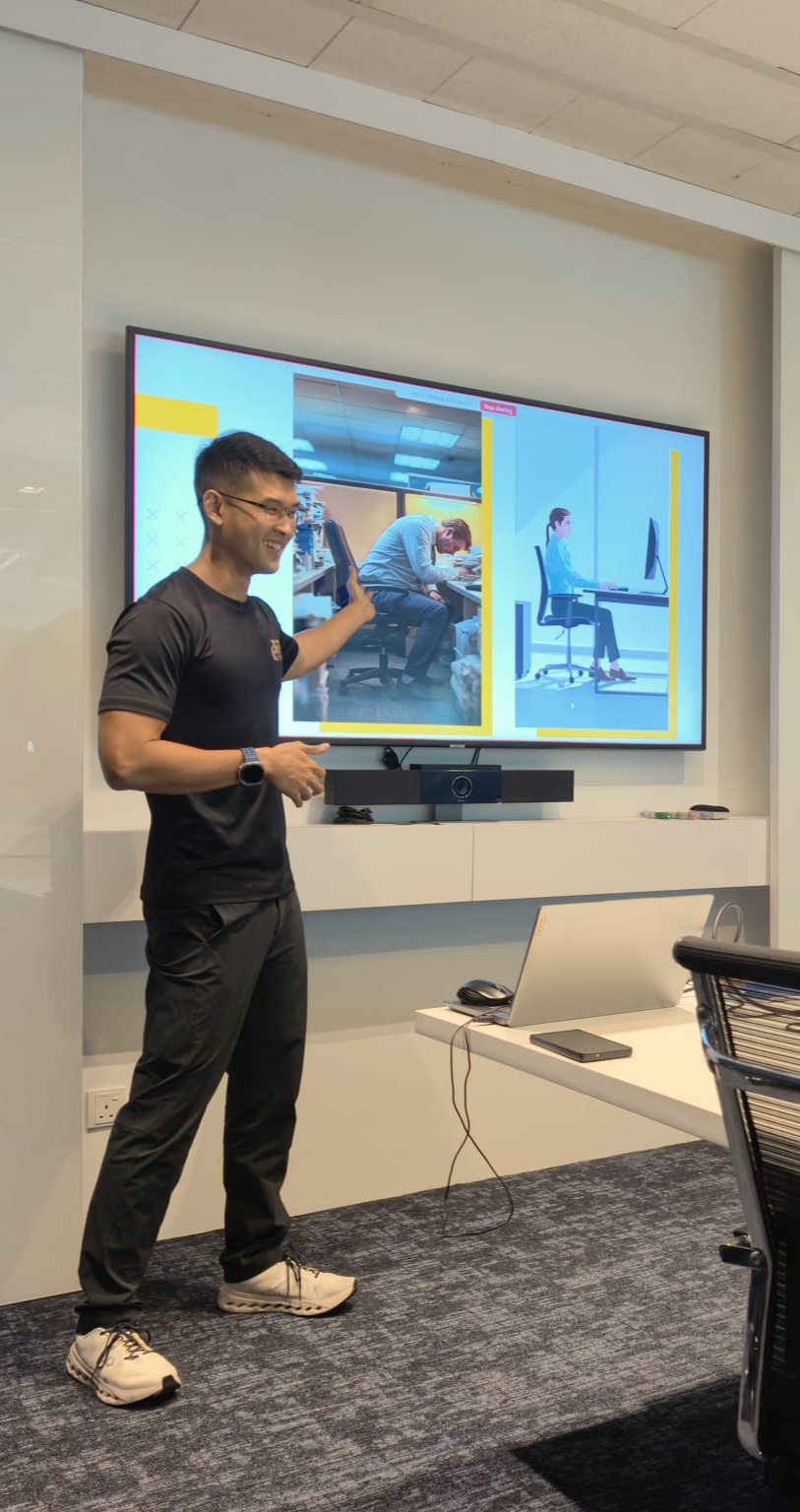
Where I started
I began at Nanyang Polytechnic with sport and wellness.
My reason for being there was simple: I wanted to help people, and I had no idea how. That's an honest starting point, and I think it's a common one.
Over time, an assumption crept in that felt like common sense: that the gym floor was the real classroom and the theory was academic decoration. I had another assumption that came earlier and was simply wrong, that personal trainers come from sport and exercise science.
Only one of those survived the next few years, and it wasn't the first one.
The thing I misunderstood
Personal training, in practice, is a certification-led profession. You take a course, sit an exam, get insured, and start coaching. That's the standard route in Singapore and most of the world.
Sport and exercise science is a different door. It's a science discipline, and the people who choose it are usually drawn to the science itself: how the body responds to load, why movement breaks down, how to measure change instead of guessing at it.
For a long time I thought those were the same road. They're two different roads that cross.
The science road
If you're the kind of person who wants to know why, this is the road, and it leads away from the gym floor more often than people expect.
Exercise physiologist. How the body responds to exercise at a systems level: cardiovascular, respiratory, metabolic. Often lab-based, testing and prescribing rather than coaching sessions.
Sports biomechanist. Movement analysis, technique, force and loading. Video, force plates, modelling. If you've wondered why one athlete's knee holds up and another's doesn't, this is the discipline that answers it.
Sports scientist. Monitoring and testing athletes or teams, interpreting data, feeding it back into training decisions.
Strength and conditioning coach. Programming for athletes across a season. Load management, speed, power.
Sports nutritionist. Fuelling, body composition, recovery, with a nutrition-specific credential. Nutrition is a regulated space in many markets, so the qualifications behind your name matter here.
These roles usually expect a degree, often a postgraduate qualification, sometimes a research background. They're also some of the more secure work in the industry, quietly, because comparatively few people can do them.
The coaching road
This is the road I work on: one person at a time, the relationship, the small changes that accumulate.
You can enter it through certifications rather than a degree, and there's real value in that. What I've come to think is more interesting than the entry route is what happens after it.
Where you can study in Singapore
If you're drawn to the science road, here's the map as I came to understand it.
Polytechnic diplomas give a practical foundation. Nanyang Polytechnic runs the Diploma in Sport & Wellness Management, and Republic Polytechnic runs the Diploma in Sport & Exercise Science, which feeds directly into the science roles above. NTU's Bachelor of Science in Sport Science and Management takes it further. Overseas degrees delivered locally are another route, and that's the one I took: Edinburgh Napier University's BSc Sport and Exercise Science, delivered at PSB Academy.
Programme names change more often than you'd expect, so check the current ones before you enrol.
What each certification taught me
Most of the big certification bodies come from the US, and they were built around different jobs. Understanding what each one is for told me more than collecting them did.
ACE, American Council on Exercise. The generalist entry into personal training, broad and practical, and the one most people meet first.
NASM, National Academy of Sports Medicine. Despite the name, it leans toward corrective exercise and the rehab end of the spectrum, which made more sense to me once I started working with people in pain.
NSCA, National Strength and Conditioning Association. The strength and performance side. Its CSCS requires a bachelor's degree plus a current CPR and AED certification, which tells you something about who it was built for, and it's the one I went on to take.
ISSN, International Society of Sports Nutrition. The nutrition-specific body, whose credential is the CISSN, for going deeper on fuelling instead of guessing.
Here's the thing I didn't understand at the start: the letters are not the education. They're a syllabus someone wrote, and the real learning happens when you try to apply it to a person who doesn't match the textbook.
What a certificate can't give you
I've met people with excellent physiques who were not good at coaching, and people with ordinary physiques who were exceptional at it.
Sport gives a useful illustration. Two of the most successful football managers of the modern era, Sir Alex Ferguson and Jose Mourinho, were never outstanding players. Ferguson had a steady professional career in Scotland without reaching the top of the game, and Mourinho never played professionally at all. What separated them was their ability to read people: knowing what each individual needed on a given day, and keeping a group of strong personalities moving in the same direction. Ferguson has consistently described his work as managing people rather than managing football.
Coaching people is its own skill. It doesn't arrive with a certificate, and it certainly doesn't arrive with a physique.
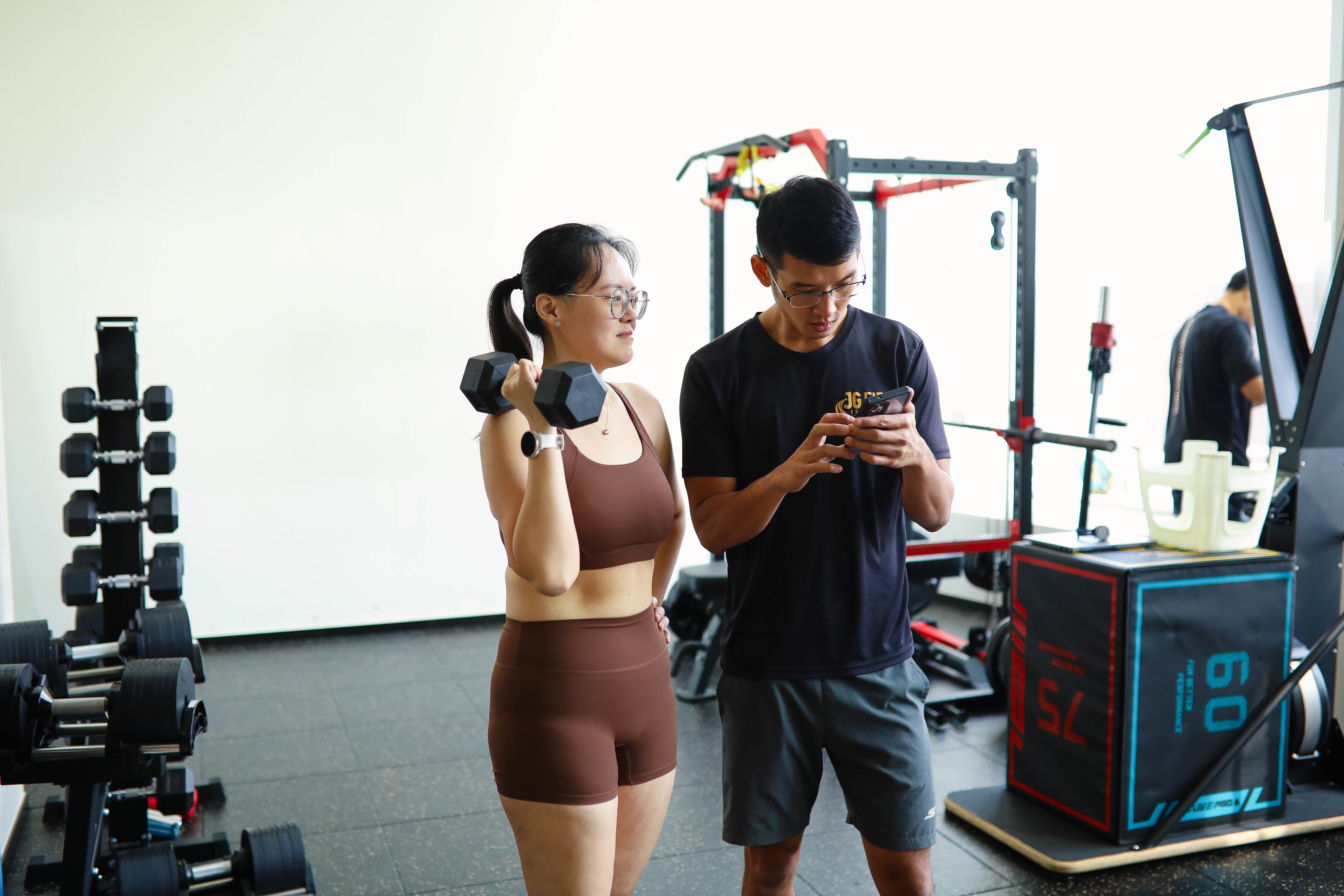
Why the theory made the floor easier
For a long time I thought the theory was decoration and the floor was the education.
I changed my mind slowly. The deeper the theory goes, the easier the practice becomes, because you stop memorising exercises and start seeing the system.
A coach who understands physiology can periodise across months instead of guessing week to week. A coach who understands biomechanics can hear a description of knee pain and reason about which tissue is loaded and what the sensible next step is.
That reasoning is also what taught me my own scope: when I can help someone myself, when a physiotherapist is the right person, and when a doctor needs to be involved.
There's another side to theory worth naming, because excellence splits into two fairly different kinds.
The first is technical mastery: periodisation, biomechanics, physiology, understanding exactly how load, volume and recovery interact. Top-class coaches in performance sport are often extremely technical, sometimes brilliant at programme design and almost indifferent to conversation. Their job is the system and the athlete's output, not the relationship.
The second is interpersonal skill: reading the person in front of you, adjusting for the day, keeping someone showing up.
Personal training sits much closer to the second. The relationship is the product, and a technically perfect programme that nobody follows is worth nothing. But the coaches I most admire have built both, and the technical depth is what gives them something worth saying once the trust is earned.

10,000 hours is the base, not the summit
There's a familiar idea that mastery takes about 10,000 hours. It comes from Anders Ericsson's research on deliberate practice and was popularised by Malcolm Gladwell. Both would tell you it's an average, not a promise.
The part I've found more useful: those hours are the base of the iceberg, not the top of it.
When a client books an hour with me, what they get is the tip. The ability to hear a description of knee pain and know where to look. The instinct for when to push and when to back off. That read comes from thousands of hours of being wrong and correcting myself.
The half that isn't in any syllabus
My path went through Nanyang Polytechnic for sport and wellness, then sport and exercise science through PSB Academy with Edinburgh Napier, then the NSCA's CSCS. Different doors, same curiosity.
Three things I'd tell the version of me who was starting.
Follow what actually excites you. If you find the subject genuinely interesting, the effort stops feeling like a tax. I still get excited working out why a programme stopped working for a client.
Keep a beginner's mindset. The sentence I carry is: I know a lot, and I also know nothing. Someone five years behind me can still spot something I've gone blind to.
Take the wider view. Fitness is a small part of sport and exercise science. Sport and exercise science is a small part of health and medicine. That perspective keeps me honest and keeps me curious.
Science never finishes the sentence
This is the part I've come to find most freeing.
Science doesn't prove something true forever. It tests a hypothesis and discards what fails. A theory can hold for 10 or 20 years and then be revised by better research, whether in biomechanics, physiology, mitochondrial function, or how a medication behaves in the body.
Which is exactly why individualisation matters. If the evidence keeps moving, "it works" really means "it has worked, on average, for people like you". So I test it on the person in front of me, adjust, and keep testing.
That's not a weakness of the field. It's the whole method, and it's a large part of why this work still holds my attention.
Why I coach the way I do
Everything above explains the path. This explains what I took from it.
The longer I do this, the less interested I am in the dramatic version of fitness and the more interested I am in the version someone can keep for 20 years. That means the person in front of me matters more than the programme template, small sustainable changes matter more than short intense pushes, and leaving someone a little more capable and a little more informed matters more than any single result.
That's the whole philosophy, really. The science gives me the tools. The years teach me which ones to use, and when to use none of them at all.
If you're at the start
The only advice I can honestly offer is the advice I'd give myself: follow what actually interests you, expect to be a beginner for longer than you'd like, and give it years rather than months.
If you'd like to read more on how this thinking plays out in practice, these pieces go deeper:
- The Hardest Part of Fitness Is Starting
- Know Thyself and the Golden Circle
- The Fitness Trade-Off Every Singaporean Makes
References
- Ericsson KA, Krampe RT, Tesch-Romer C. The role of deliberate practice in the acquisition of expert performance. Psychological Review, 1993;100(3):363-406.
- Gladwell M. Outliers, 2008, which popularised the 10,000-hour rule.
- Popper K. The Logic of Scientific Discovery, 1959, on falsifiability.
- American Council on Exercise (ACE), certification pathways.
- National Academy of Sports Medicine (NASM), corrective exercise pathways.
- National Strength and Conditioning Association (NSCA), CSCS degree and CPR/AED requirements.
- International Society of Sports Nutrition (ISSN), CISSN.
- Nanyang Polytechnic, Diploma in Sport & Wellness Management; Republic Polytechnic, Diploma in Sport & Exercise Science.
- Nanyang Technological University, Bachelor of Science in Sport Science and Management.
- PSB Academy and Edinburgh Napier University, BSc Sport and Exercise Science (top-up).


