Pizza parties are not engagement. Neither is a motivational email from management.
Real engagement is when colleagues feel genuinely looked after, connected to each other, and part of something worth staying for. And in 2026, the companies getting it right in Singapore are doing it through health and movement.
Here are eight employee engagement ideas that work in a Singapore office context. Treat them as sparks for your own version rather than a menu to order from, the best programmes are always shaped to the actual team.
1. Inter-department fitness challenges with a leaderboard standee
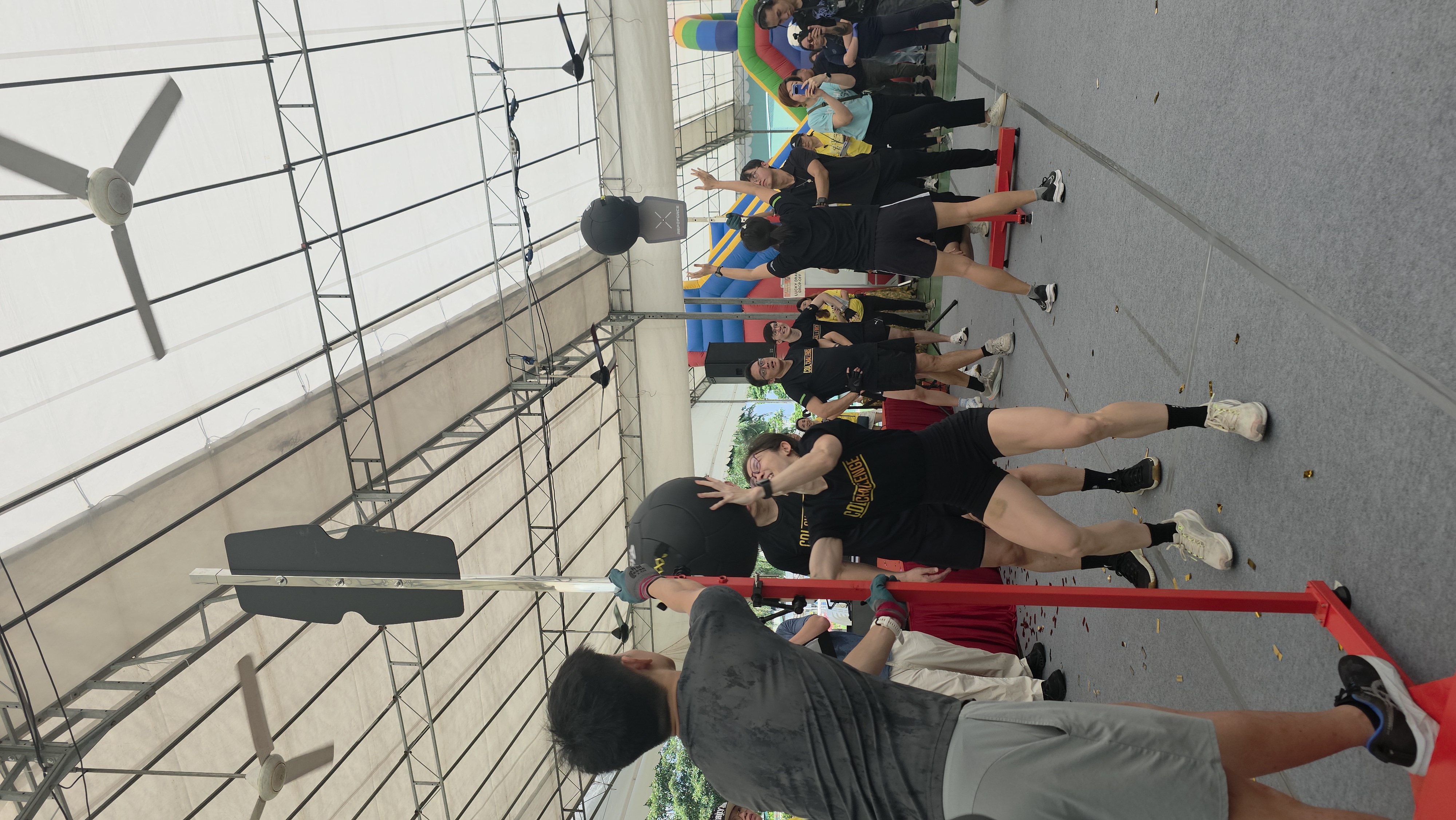
Sales vs Ops, and this time there's a trophy. Short, measurable challenges work best: a squat challenge, a battle rope relay, a plank hold-off. Put a branded leaderboard standee in the pantry so scores update all week and trash talk writes itself. Companies that run these well make them beginner-weighted, teams average their scores, so the department's least active colleague becomes its most valuable player. All the gear, scoring system and standee can come as part of a single activation, nobody in HR needs to source battle ropes.
2. Reaction game tournaments
Arcade energy, zero fitness prerequisite. Reaction games are the great equaliser: the fittest guy in the office can lose to the auntie from accounts. Run a lunchtime tournament with a live bracket and watch a crowd form around the finalists.
We built a 30-second digital version you can try right now: The Flash Challenge. Play it, send your score to a colleague, and see how fast the competition starts. It's a small taste of the game activations we run at company events.
30 seconds. Tap the orange targets, avoid the red ones. How fast are your reflexes?
3. Posture check booths (with a health screening option)
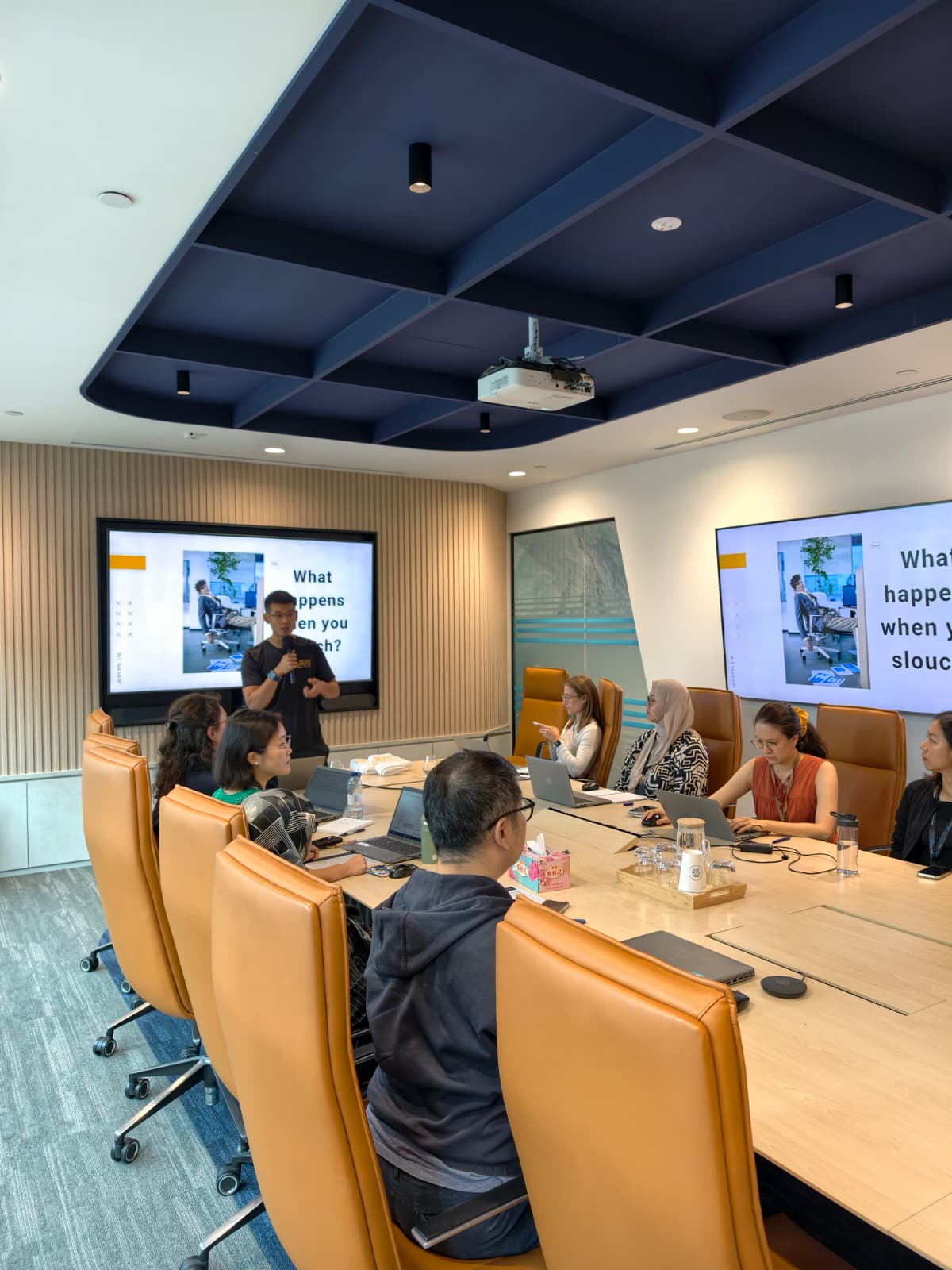
At town halls, family days and health fairs: a booth where a coach checks desk-worker posture, grip strength and basic movement. It's personal, it's two minutes, and it starts better conversations than any poster campaign. It also reaches the colleagues who would never sign up for a class.
If you want to go further, posture checks can sit alongside full health screenings, and we can help engage the right screening partners so employees get more than a "you're fine, next" experience.
4. Movement, then a nutrition lunch
A team bonding format that works: 45 minutes of light group movement (nothing scary, scaled for everyone), followed by a healthy catered lunch where a coach walks the table through smart choices at hawker centres and zi char stalls. The session breaks the ice, the lunch turns it into a genuine team moment, and everyone leaves with two or three practical food swaps. The coaches who run the movement session can stay for the lunch walkthrough, so the whole thing runs as one activation.
5. A 12-week give-back programme with a community partner
The most meaningful format we've seen: a structured 12-week programme where employees help seniors in the community stay active, guided and hand-held by coaches, so no one is left figuring it out alone. Employees volunteer in pairs, learn the basics of safe, patient coaching, and give their time where it genuinely matters. Programmes like this build empathy, patience and team bonds in a way no office activity can, and they give the company a story worth telling. A programme like this can be structured and coached end to end, charity partner included.
6. Desk mobility and posture resets
For teams that can't leave their desks, bring the session to them: a 15-minute guided mobility break for the whole department, screens off, backs unlocked. It's the lowest-barrier wellness activity there is, and stiff-necked desk workers feel the difference the same afternoon. Run as a guided session rather than a YouTube video, it becomes a recurring calendar slot people actually protect.
7. Subsidised personal training as a staff benefit
The boldest version: offer keen employees a subsidised block of 1-on-1 sessions with a certified trainer. It signals the company invests in individuals, not just headcount, and the colleagues who take it up become informal wellness ambassadors internally.
8. A wellness passport for the whole year
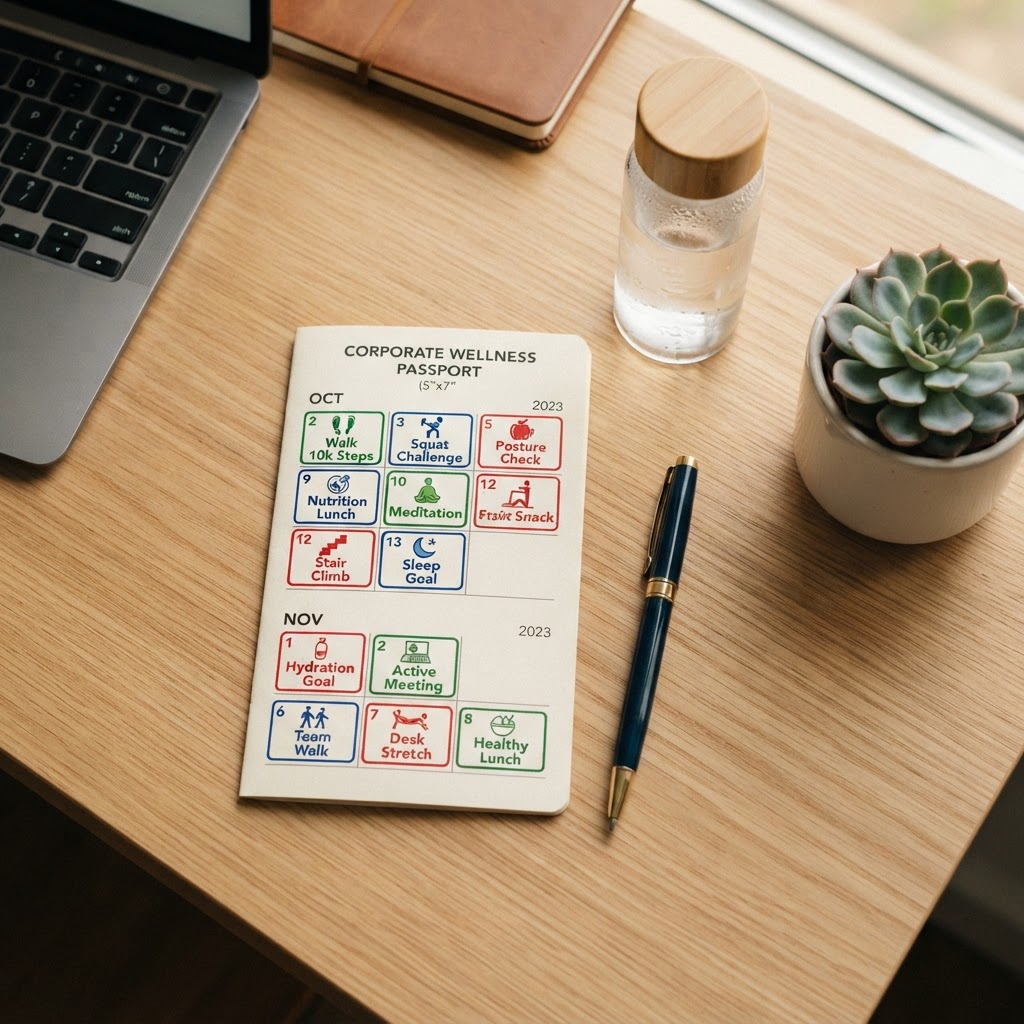
The glue that holds everything together: a simple stamp card. Every activity in the calendar, from the squat challenge to the nutrition lunch, earns a stamp. Full card by quarter's end earns a draw entry, small prize, big bragging rights. It turns one-off events into a year-round habit loop, and it gives quiet, non-competitive colleagues a reason to join in too. A passport and the activity calendar behind it can be designed alongside your team's actual schedule.
Where to start
Don't launch all eight. Pick two, run them for a quarter, then ask two questions: did people show up, and would they want it again? That's how a wellness calendar gets built on evidence instead of guesswork.
If you want help designing any of these for your team, that's exactly what our corporate wellness programme does.