Short answer: neither is universally better.
Strength training is the more effective choice for building muscle, increasing maximal strength and loading bone. Pilates is the more effective choice for movement control, trunk stability, breathing mechanics and mobility. For most people, the best answer isn't one or the other. It's both.
Why this debate exists at all
Fitness arguments rarely stay about training. They become about identity.
It reminds us of the old martial arts world. Different schools, different styles, and eventually a lot of energy spent arguing over which style was superior. Bruce Lee's answer was to stop defending one system and start asking what each system could actually teach him.
That's the position we take with our clients at JG Fit. You don't need to tear down Pilates to justify lifting weights, and you don't need to dismiss lifting to appreciate Pilates. You need to know what each method does well, and be honest about what it doesn't.
So let's be honest about both.
What is the difference between strength training and Pilates?
The core difference is how each method creates and progresses a training stimulus.
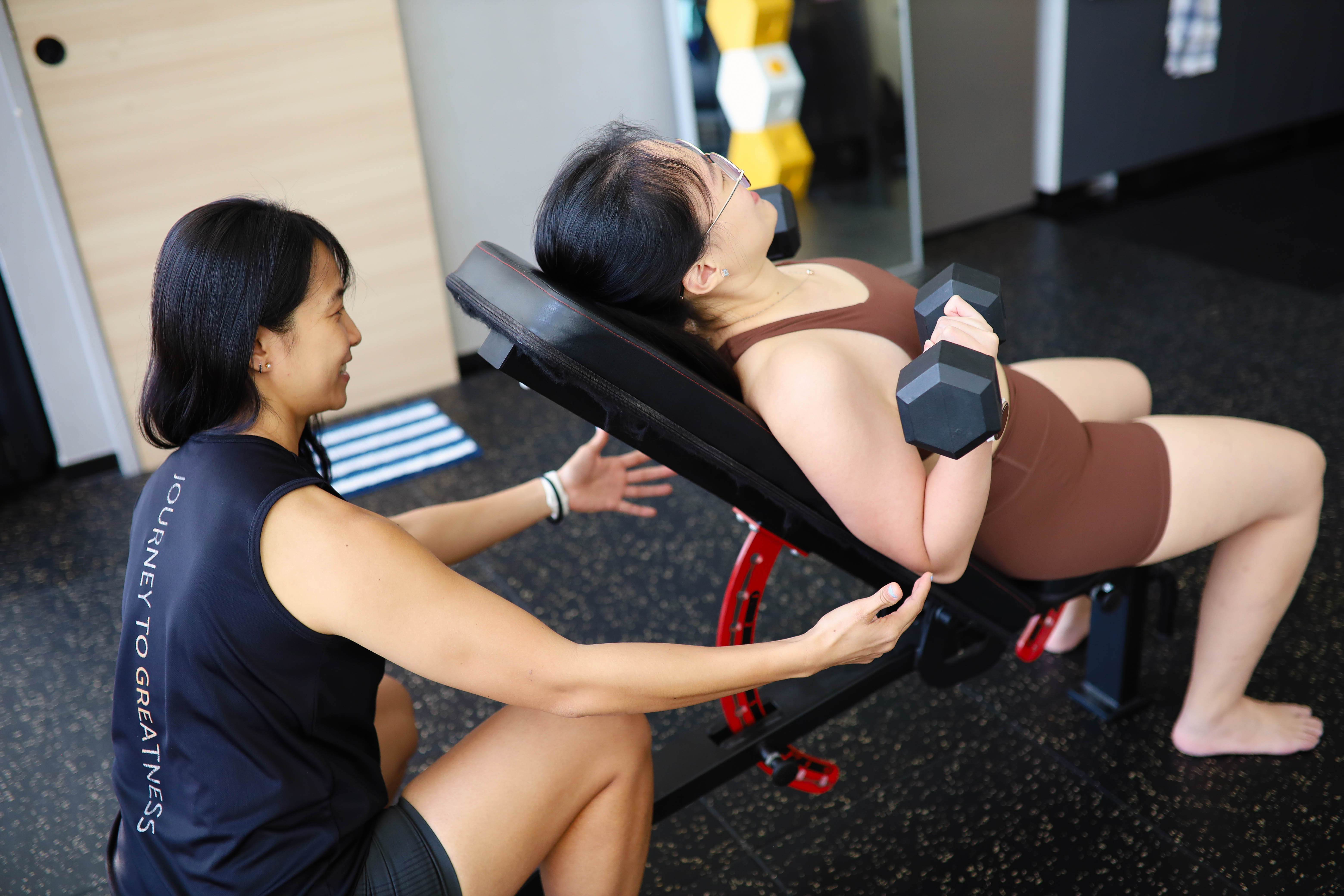
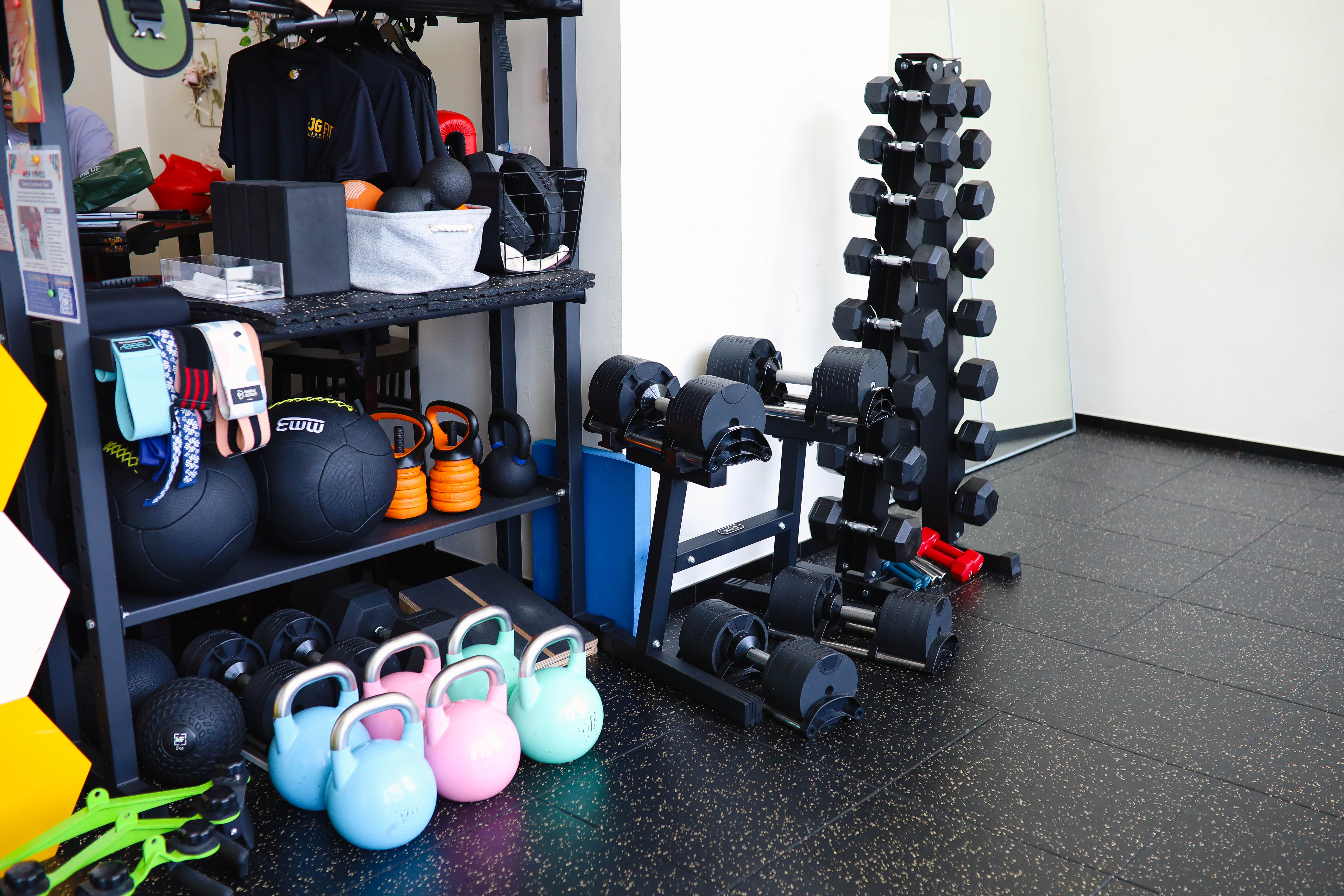
Strength training applies external resistance (barbells, dumbbells, machines, cables, bands or bodyweight) and progressively increases the demand over time. Progress is measured objectively: more load, more reps, more total volume.
Pilates applies controlled, precise movement, often with spring-based resistance on a reformer or bodyweight on a mat. Progress is measured largely by quality: better control, better range, better coordination, better positional endurance.
Both build physical capacity. They simply load the body differently and measure success differently.
What is strength training best for?
Strength training is the most direct method available for increasing muscle mass, maximal strength and bone loading capacity.
The mechanism is progressive overload. If you squat 40 kg for 8 reps in January and 60 kg for 8 reps in June, your capacity has measurably increased. That objectivity is the method's biggest advantage: it is very hard to fool yourself about whether you are progressing.
It is the primary choice when the goal is to:
Build muscle mass Increase maximal strength Load bone and support bone mineral density Improve athletic performance and power output Preserve muscle and function with age
That last point matters more than most people realise. Muscle mass declines by approximately 3 to 8 percent per decade after the age of 30, and the rate of decline is higher again after 60. Resistance training is the most reliable intervention we have to slow that process.
The bone evidence is equally direct. The LIFTMOR randomised controlled trial followed 101 postmenopausal women with low bone mass through eight months of twice-weekly, 30-minute supervised training at high intensity: five sets of five repetitions above 85 percent of one-rep maximum. The group produced significantly greater improvements in lumbar spine and femoral neck bone mineral density than a control group doing low-intensity home exercise, with no increase in fracture risk.
That is a meaningful finding, and it's worth reading carefully: the benefit came from heavy loading, not simply from moving.
But heavier isn't automatically better. Good programming means selecting the right movement, load, volume and rate of progression for the individual. A beginner, a competitive athlete and a 75-year-old with low bone density should not be running the same programme simply because all three are "doing strength training."
What is Pilates best for?
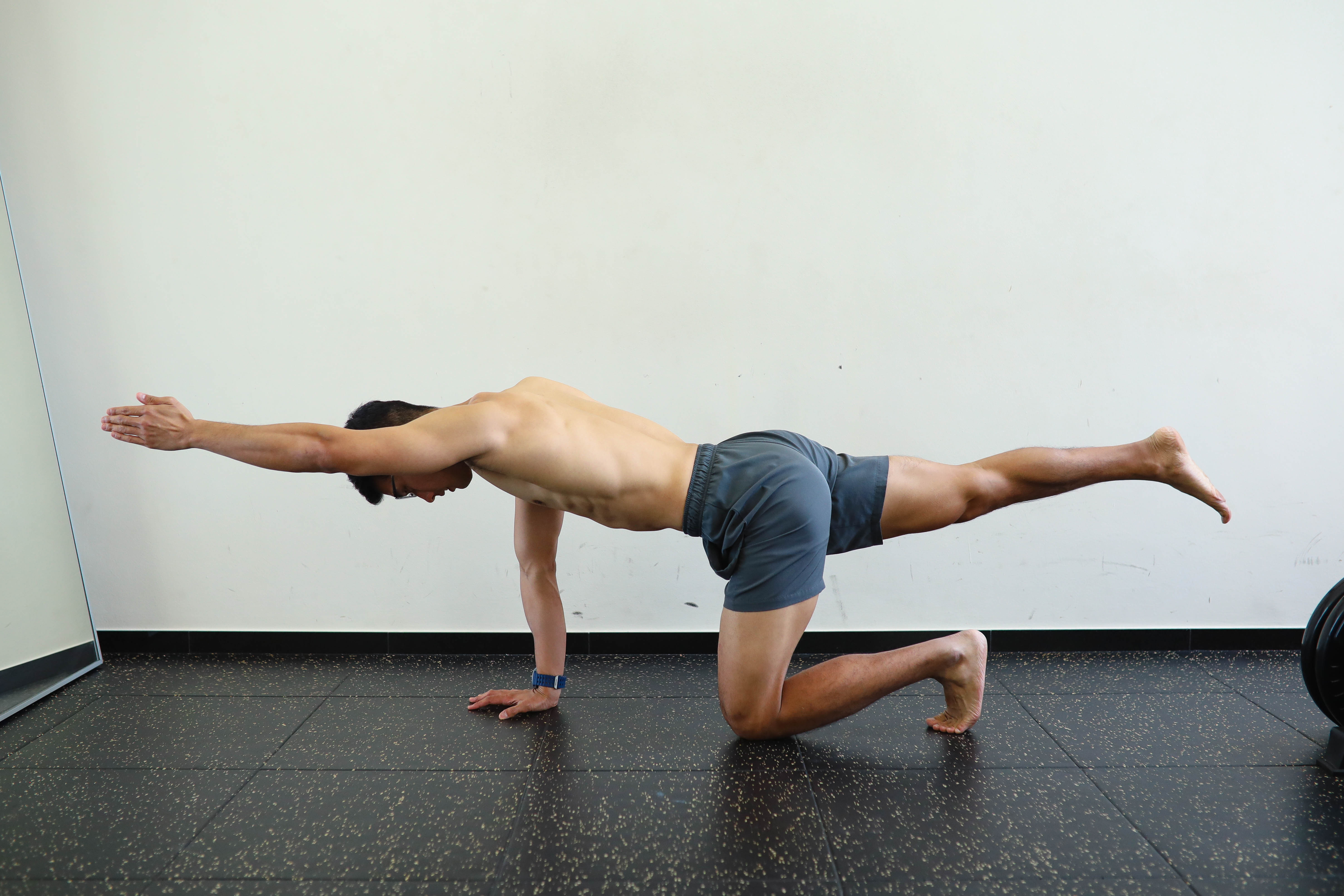
Pilates is best for developing movement control, trunk stability, coordination, breathing mechanics and mobility through controlled ranges.
It is not "easy exercise." Depending on style and equipment, the muscular demand can be significant, particularly through the trunk, hips and shoulders, and particularly in positional endurance work where you hold and control a position rather than move through it quickly.
Where strength training asks how much can you move, Pilates asks how well can you control what you're moving. Practically, it tends to prioritise:
Movement precision and control Trunk and pelvic stability Coordinating breath with movement Postural awareness Mobility and controlled range of motion Muscular endurance
For someone returning from injury, someone at a desk for ten hours a day, or someone with plenty of strength but poor positional awareness, those are exactly the qualities that need work.
Is one actually better than the other?
For a specific goal, yes, and pretending otherwise doesn't help anyone.
If your goal is to build muscle, increase maximal strength or improve bone mineral density, strength training is genuinely superior. Pilates cannot produce the progressive mechanical loading those adaptations require. Spring resistance and bodyweight have a ceiling; a barbell does not.
Equally, if your goal is to develop fine motor control, breathing coordination and trunk stability through controlled range, a general strength programme is a slower and less precise route than Pilates.
What is not true is the broader claim that one method is superior overall. That claim only makes sense if everyone shares the same goal, and no one does.
The boundaries are also blurrier than social media suggests. Strength training improves movement control. Pilates builds strength, especially in untrained people. A good strength coach cares about technique, breathing and quality of movement. A good Pilates instructor cares about progressive challenge. The difference is emphasis and how the stimulus is progressed, not a wall between two worlds.
Can you do strength training and Pilates together?
Yes, and for most of our clients, this is the best answer. The two methods complement each other because they load the body differently and rarely compete for the same recovery capacity.
Three principles we apply when combining them:
1. Keep one method as the primary driver. If the goal for this training block is strength, strength gets the fresh days and the progressive tracking, and Pilates supports it. Trying to progress both maximally at the same time usually stalls both.
2. Mind the order. Extended trunk endurance work immediately before a heavy lifting session can compromise stability under load. Schedule Pilates after strength work, or on a separate day.
3. Track them differently. Strength is logged in kilos and reps. Pilates is assessed on control, range and quality. Judging Pilates by load misses the point of doing it.
How do I choose the right one for me?
Four questions, in this order:
1. What is my actual goal? Strength, muscle, bone health, performance, movement quality, rehabilitation, general health. Each points somewhere different. Vague goals produce vague programmes.
2. What does my body currently need? Someone six weeks post-injury, someone completely new to exercise and a competitive athlete require different entry points, regardless of what they would prefer to do.
3. What will I actually keep doing? The theoretically optimal programme you dread is worse than the good programme you enjoy. Adherence is a training variable, not an afterthought.
4. Do I need to choose at all? Most people don't. This is the most commonly overlooked option and often the correct one.
Frequently asked questions
Is Pilates enough on its own for strength? For a beginner, Pilates will improve strength initially. For continued gains in muscle mass and maximal strength it is not sufficient on its own, because the load cannot be progressed far enough.
Can Pilates replace strength training for bone health? No. Bone responds to high-magnitude loading applied at speed. The LIFTMOR trial produced its bone density results using loads above 85 percent of one-rep maximum, an intensity Pilates is not designed to deliver.
Will strength training make me bulky? Building significant muscle mass requires years of consistent, progressive training combined with sufficient calorie intake. It does not happen accidentally.
How many days a week should I train? The World Health Organization recommends muscle-strengthening activity involving all major muscle groups on two or more days per week, alongside 150 to 300 minutes of moderate-intensity aerobic activity. Two to three strength sessions plus one to two Pilates sessions per week fits comfortably within that.
Is Pilates good for back pain? It can be. A Cochrane review found that compared with minimal intervention, Pilates reduced pain and disability in the short and intermediate term, with medium effect sizes, though the authors rated the evidence as low to moderate quality, and Pilates was not clearly superior to other forms of exercise. In other words, it helps, but largely because it is structured exercise rather than because it is uniquely effective. Persistent back pain should always be assessed by a qualified clinician.
The point we would most like you to take away
You don't have to tear something else down to build your own thing up.
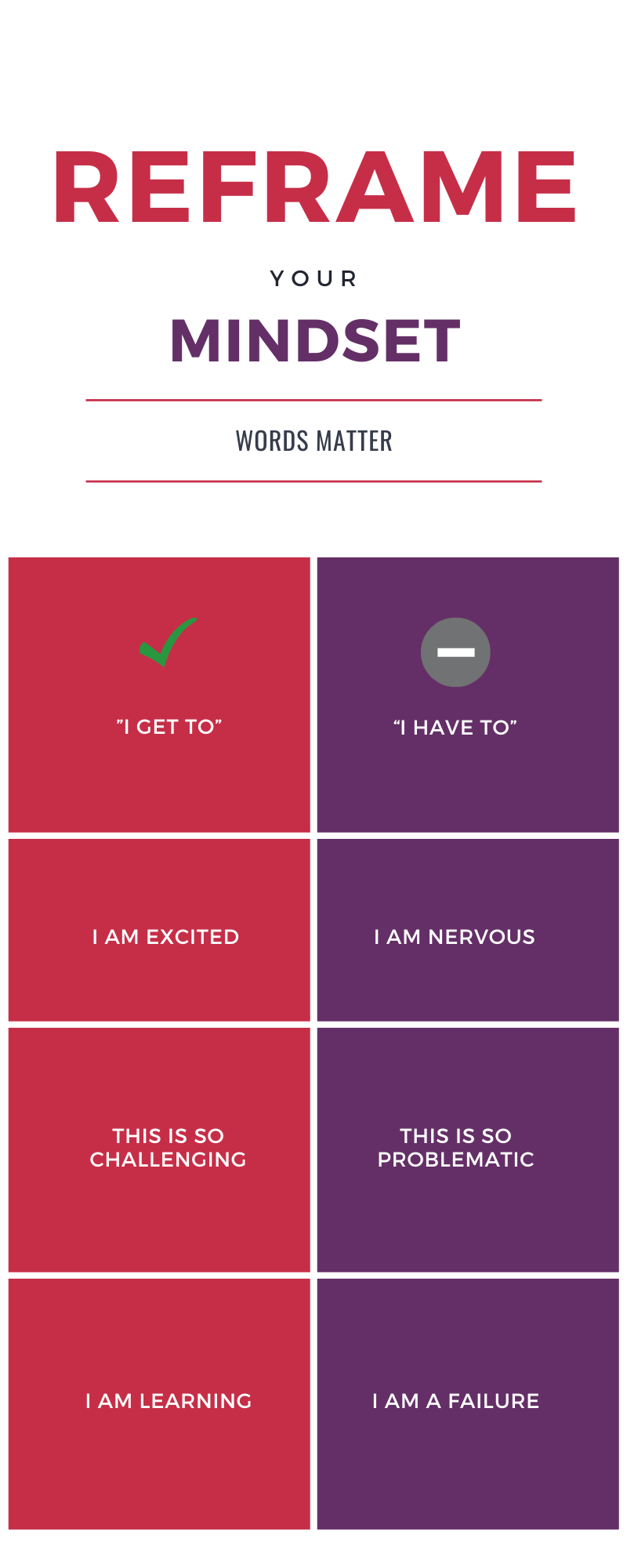
"Pilates is better than lifting." "Weights are better than Pilates." "Cardio kills your gains." These arguments persist because they turn a training method into an identity, and once exercise becomes identity, people argue about superiority instead of asking about appropriateness.
There isn't one ultimate exercise method. There is only the right question:
What is appropriate for this person, at this point in their life, for this particular goal?
Sometimes the answer is strength training. Sometimes it's Pilates. Often it's both.
Work with JG Fit
We don't start with a method. We start with the person: your goals, training history, physical capability and what you will realistically sustain. Then we build the programme that fits.
If you aren't sure which approach suits you, book a free consultation and we'll work it out properly.
References
- Volpi E, et al. Muscle tissue changes with aging. Current Opinion in Clinical Nutrition and Metabolic Care. https://pmc.ncbi.nlm.nih.gov/articles/PMC2804956/
- Watson SL, et al. High-Intensity Resistance and Impact Training Improves Bone Mineral Density and Physical Function in Postmenopausal Women With Osteopenia and Osteoporosis: The LIFTMOR Randomized Controlled Trial. Journal of Bone and Mineral Research. 2018. https://pubmed.ncbi.nlm.nih.gov/28975661/
- World Health Organization. WHO Guidelines on Physical Activity and Sedentary Behaviour. 2020. https://www.ncbi.nlm.nih.gov/books/NBK566046/
- Yamato TP, et al. Pilates for Low Back Pain: Complete Republication of a Cochrane Review. https://pubmed.ncbi.nlm.nih.gov/26679894/
This article is for general information and is not a substitute for individual medical advice.