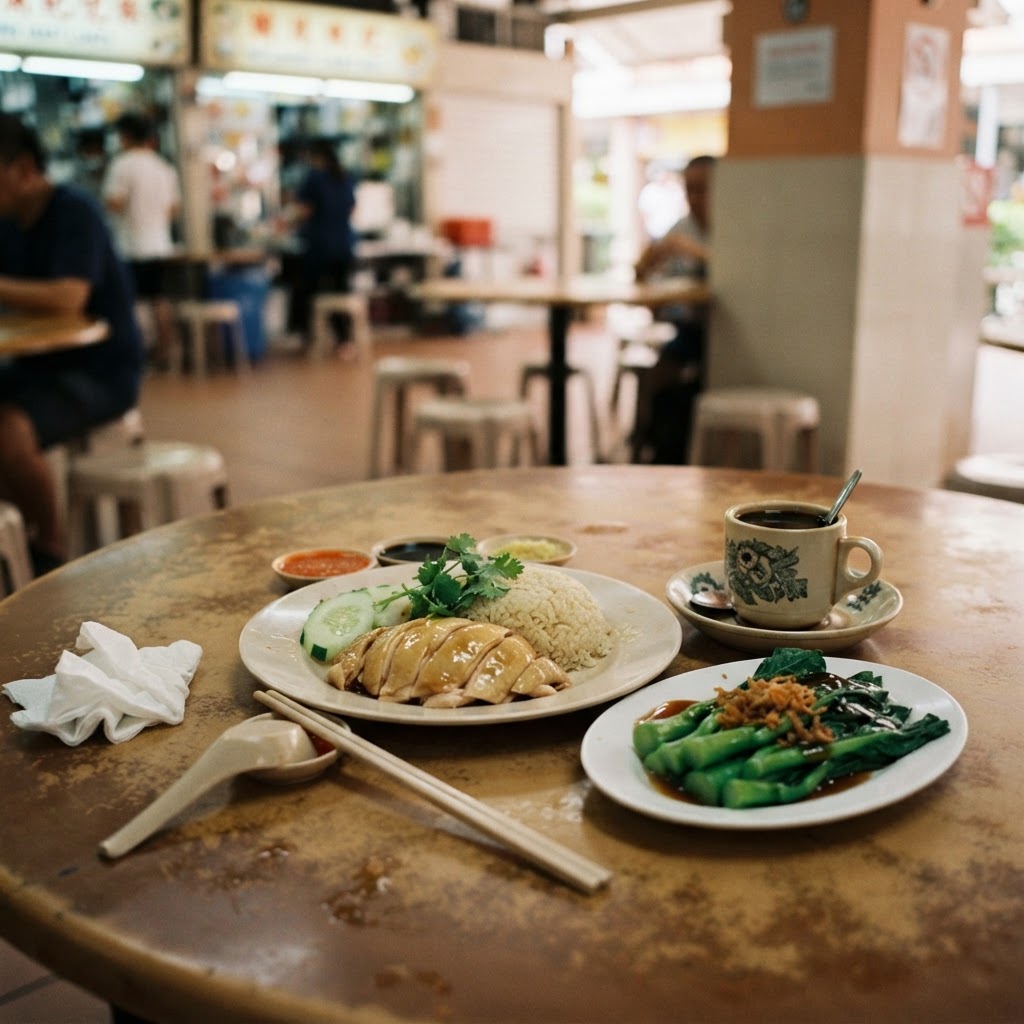
Every few weeks, a client sits down in our Clarke Quay studio and confesses their food sins. Chicken rice on Tuesday. Kopi with condensed milk every morning. Ice cream after a bad day. Then comes the question, said like a guilty plea: "So I have to give all this up?"
The honest answer: no. You really don't.
If fat loss required living on steamed chicken and plain broccoli, Singapore would be the hardest place on earth to get lean. Instead, the people who lose fat and keep it off here tend to eat their favourite food weekly, sometimes daily, just with two invisible systems working quietly underneath. Here they are.
Why banning foods backfires
The classic diet goes like this: strict rules, a forbidden list, initial success, then one stressful week. A work dinner appears, you eat the "wrong" thing, and the brain says "well, the week is ruined", so you finish the dessert, skip the next workout, and restart next Monday. Some people run this loop for years. The rebound that follows strict restriction is predictable, not surprising: your body and mind both push back hard against being told "never again".
Notice the trap. The problem was never the chicken rice. The problem was the all-or-nothing rule that turned one plate into a broken week. The fix is not a shorter forbidden list, it is replacing the list with a frequency scale.
Rule 1: The Nutritional Spectrum
Nothing is forbidden. Everything gets a frequency.
Instead of cutting foods out, you sort every food by how often it supports your energy, health and goals. Three lanes:

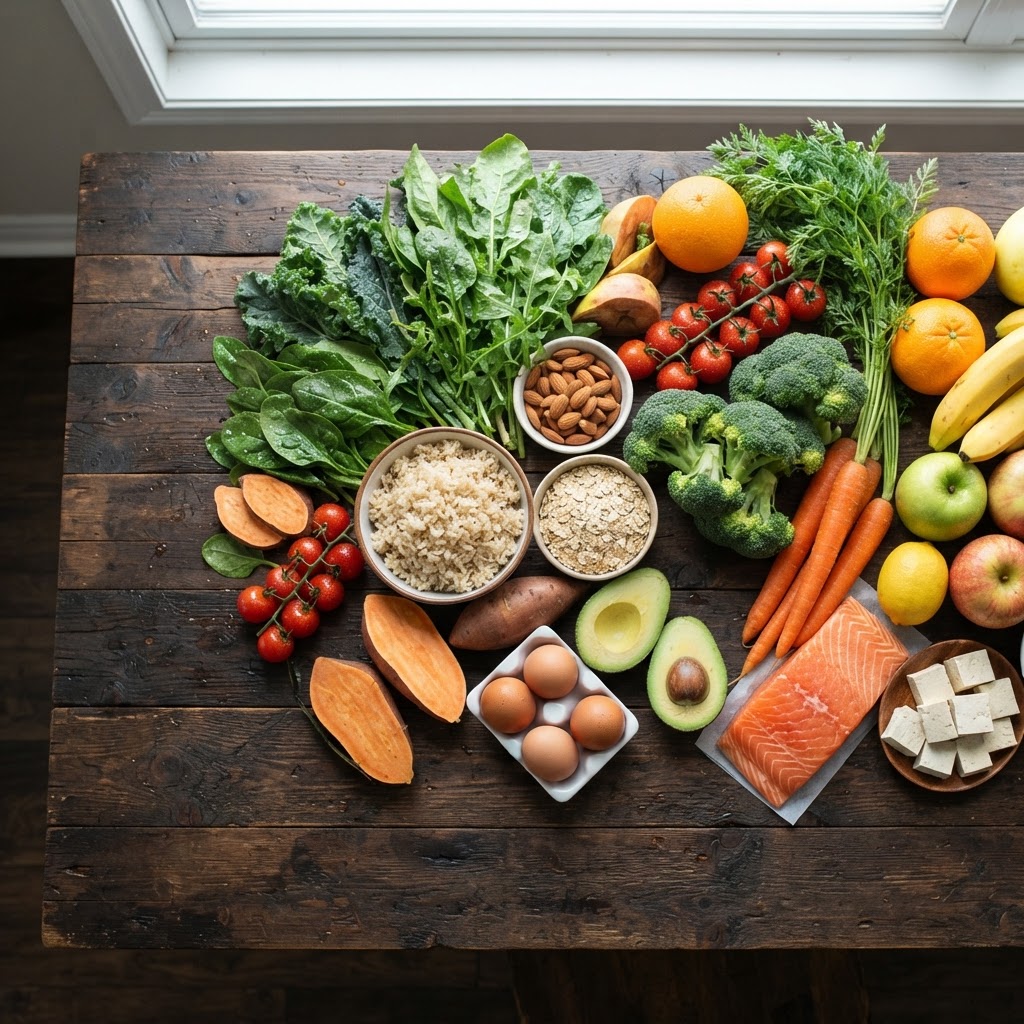
Eat More Often, the foundation
Nutrient-dense, minimally processed whole foods that keep you full, energised and recovering well.
Proteins: chicken, eggs, fish, tofu, lean beef, Greek yoghurt Carbs: oats, sweet potato, brown rice, white rice, sourdough, whole fruit Fats: avocado, almonds, olive oil, walnuts Vegetables: fresh vegetables of different colours Local picks: fish soup with rice, thunder tea rice, yong tau foo (soup style), kopi O siu dai
Eat Sometimes, the bridge
Slightly more processed or calorie-dense staples that keep real life practical and enjoyable.
Proteins: fried chicken, roast duck or char siew, deli meats, veggie patties Carbs: whole-wheat pasta, granola bars, dried fruit Fats: cheese, butter, dark chocolate (70% and above), nut butters Convenience: flavoured protein powders, frozen stir-fry mixes, canned fruit in light syrup Local picks: laksa (regular bowl), vegetable fried rice, kopi C siu dai
Eat Less Often, the extras
Highly engineered, ultra-tasty treats. Not banned. Chosen mindfully, in honest portions.
Proteins: hot dogs, bacon, luncheon meat, anything in heavy batter Carbs: sugary cereals, pastries, chips, soft drinks Fats: deep-fried zi char, heavy cream dressings, ice cream tubs Local picks: char kway teow, fried carrot cake, roti prata, full-sugar bubble tea
Notice what this does. The red lane is still a lane. Your favourite foods all live somewhere on this spectrum, and they stay. Chicken rice becomes 'the white rice and chicken sit in the green lane, the sauce and fried sides are red-lane extras you choose'. Bubble tea becomes a red-lane item you schedule, not a moral failure you hide. The question changes from "can I eat this?" to "how often?", and that is the only question that matters long term.
There is a physical reason the green lane earns its place too. Protein and fibre are the two things that reliably blunt hunger, while ultra-processed, high-fat, high-sugar foods are engineered to be eaten past the point of fullness. Sorting foods by lane is really just sorting them by how hard they are to overeat.
Rule 2: Hara Hachi Bu
The second rule has a name and a few centuries of history behind it. Hara hachi bu is an Okinawan instruction, literally "eat until your belly is eight parts full". Okinawans, featured in the Blue Zones documentary as some of the longest-lived people on earth, were practising this before portion awareness had a brand name.
The practice itself: stop at satisfied, not stuffed. Fullness signals take about 20 minutes to reach the brain, so eating slowly isn't a mindfulness cliche, it's physics. Most people who try this for two weeks find they had been eating well past comfortable fullness all along, sometimes by a margin that surprises them. You can keep every food on the spectrum. You just stop when you're at eight parts.
And that's when something interesting happens: the "forbidden" food loses its power. When laksa is allowed, you stop planning your whole week around it. Restriction creates obsession. Permission creates moderation.
The keep-it playbook, Singapore edition
Kopi or teh: kopi O siu dai (black coffee, less sugar) as the daily default. The full condensed-milk version on days you choose it, not by reflex.
Chicken rice: white rice, sauce on the side, add a vegetable plate to share.
Char kway teow: a chosen occasion, not an autopilot order, with a lighter day around it.
Laksa or mee siam: regular bowl, no extra noodles, lighter breakfast and lunch that day.
Bubble tea: siu siu dai or 25% sugar, no pearls, a few times a week instead of daily.
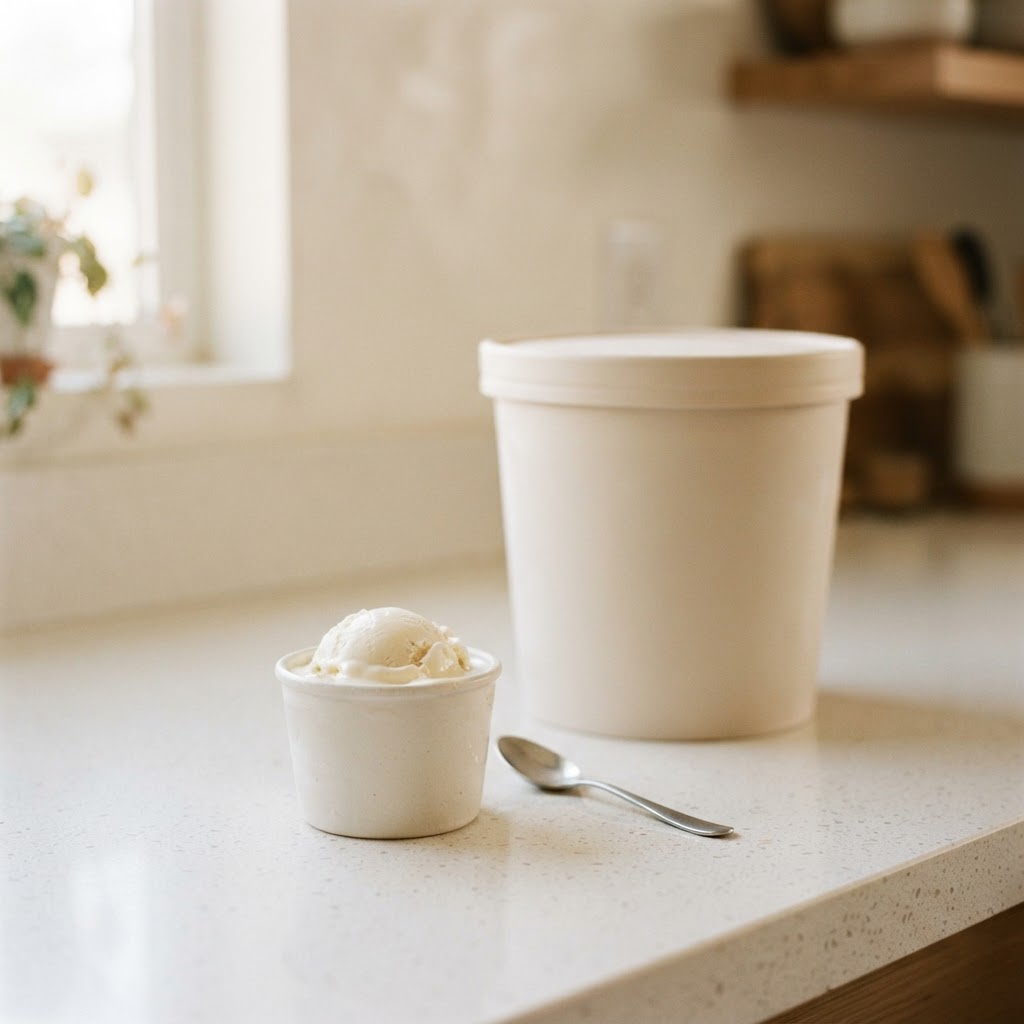
Ice cream: single-serve cup, never the tub. The tub is not a portion.
Zi char with friends: order the vegetable dishes too, protein dishes first, rice last.
What about a strict kickstart?
A stricter sprint for a wedding, a photoshoot or a holiday can genuinely help you start. It proves change is possible and builds momentum. Just pair it with the plan for what comes after: the kickstart gets you going, your habits keep you there. We'll unpack that trade-off properly in an upcoming article.
Where the food knowledge lives
Most of this comes down to choosing better from the food you already know and love, which is exactly what our free guide Navigating Singapore Makan is built around: how to read any hawker stall, restaurant or coffeeshop menu and leave satisfied. Get the guide here. For where you eat, our article on making better food choices anywhere covers the environments. This one covers what and how much.
Fat loss is decided by your average week, not by any single plate. So the next time someone tells you to give up chicken rice, you can tell them the honest answer: you're keeping it, and you're keeping your results.
Want a hand building that version? Book a free consultation. We coach the food you actually eat, not the food some diet PDF wishes you ate.


